



Introduction:
Bitcoin (BTC) has been stuck in a prolonged consolidation phase over the past several months, largely driven by a significant decline in capital inflows. According to a recent report by Glassnode, this extended consolidation—lasting since the 2024 Bitcoin halving—has drawn attention to the shifting behavior of short-term holders (STHs) and their impact on market trends. Let’s dive into the key factors contributing to this stagnation and explore what this means for Bitcoin’s future price movements.
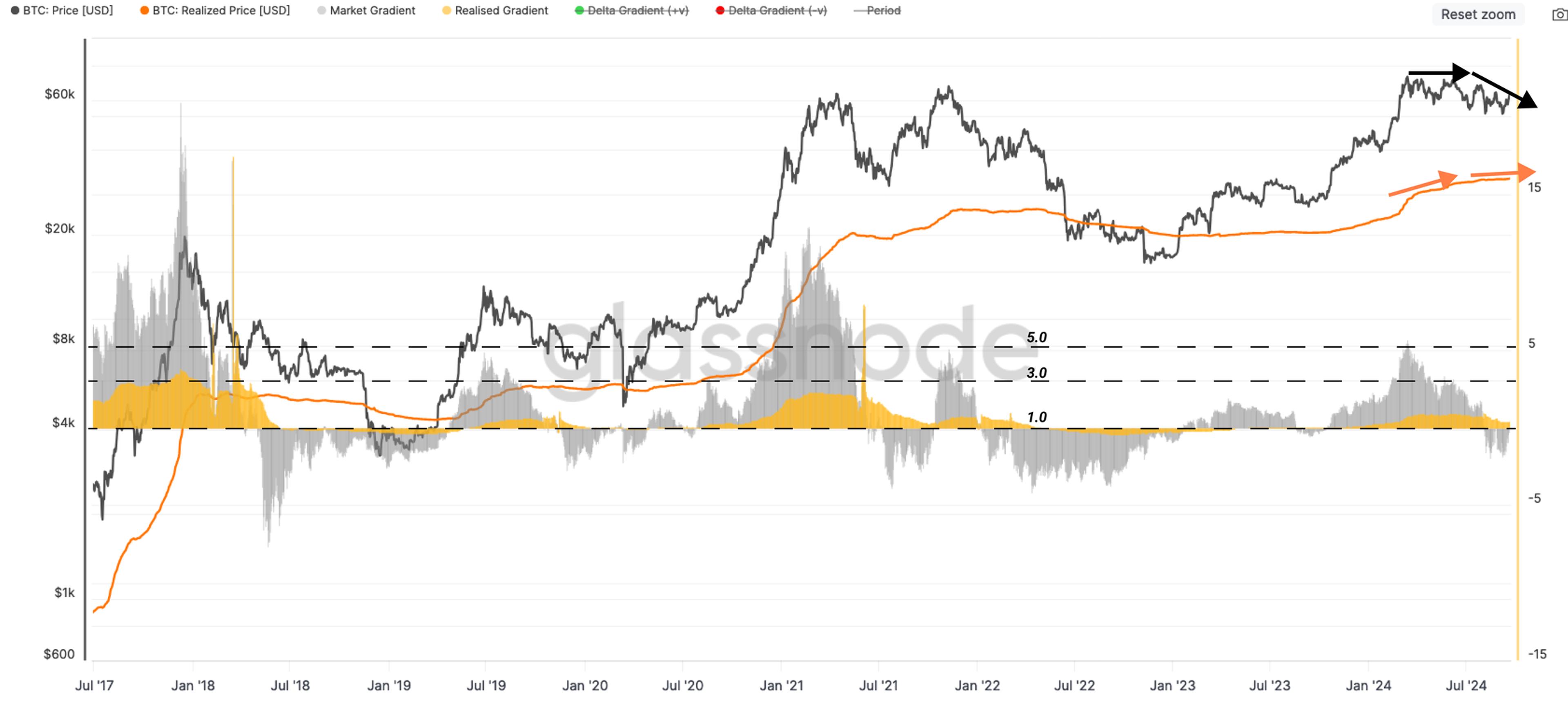
Bitcoin 155-day market and realized delta gradient. Source: Glassnode
Decline in Capital Inflows
Glassnode’s September 25 report revealed that Bitcoin’s price stagnation coincides with a marked drop in capital inflows into the network. In the past six months, capital has flowed out of Bitcoin at a rate not seen since the market contraction of 2019-2020. This trend has contributed to Bitcoin’s inability to break out of its current price range.
The analysis highlights that STHs, or those who have held Bitcoin for less than 155 days, are playing a significant role in this prolonged period of consolidation. Their market activity, marked by declining inflows and mounting unrealized losses, is pulling down the spot price of Bitcoin.
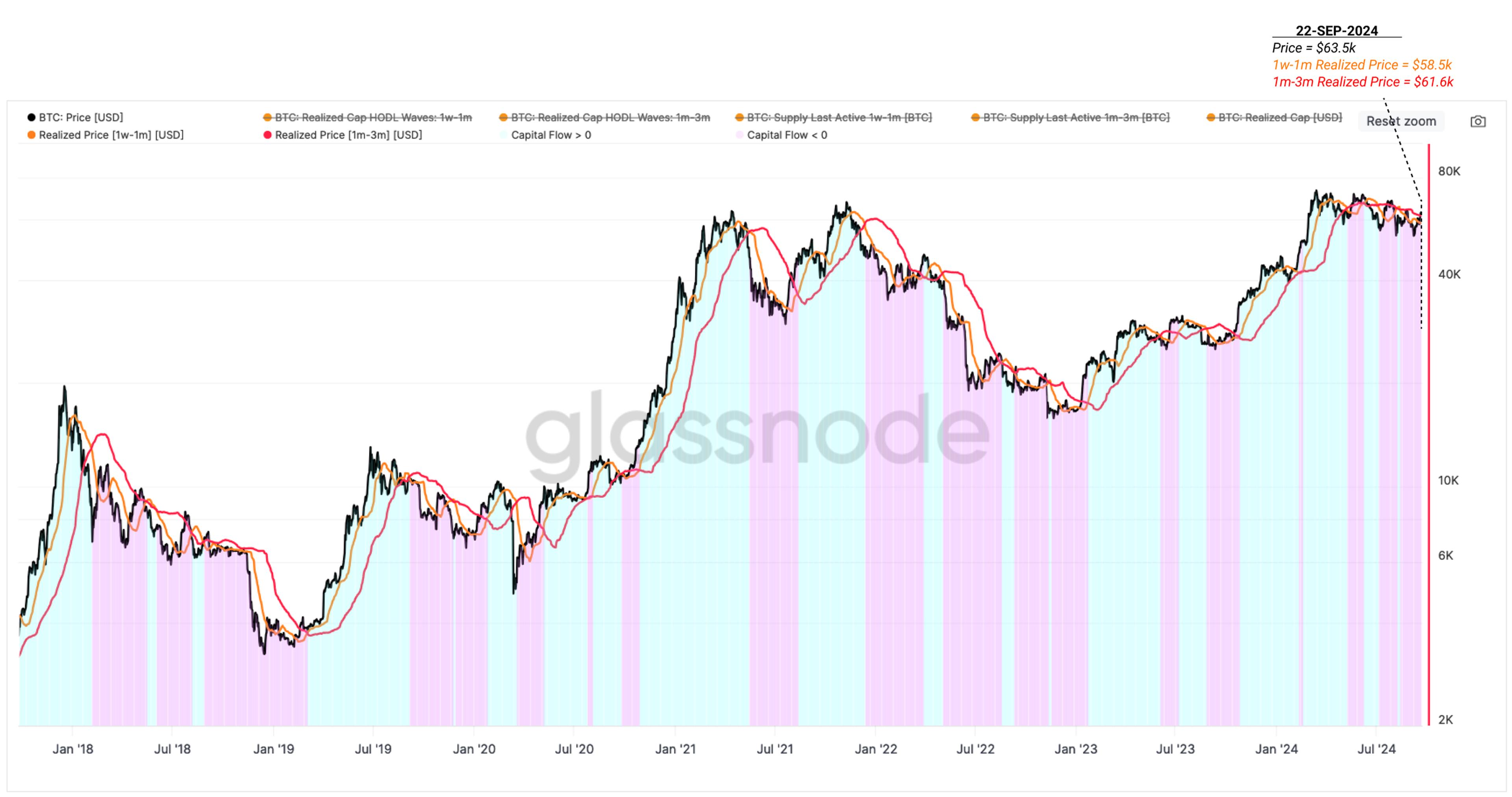
Bitcoin capital flows by STH sub-cohorts. Source: Glassnode
Short-Term Holders Under Pressure
The report underscores the financial pressure felt by short-term holders, particularly those who purchased Bitcoin between June and September 2024. According to Glassnode, these investors are now facing increasingly larger unrealized losses, though the severity of these losses is notably lower than during the March 2020 COVID-19 crash or the mid-2021 market sell-off.
Despite the pressure on new investors, the overall confidence in Bitcoin’s market remains steady. The unrealized losses are less extreme than in past bearish trends, and many short-term holders have resisted the urge to sell, displaying a greater level of market confidence.
Analyzing Capital Outflows
The extended consolidation period has also revealed important insights about Bitcoin’s market structure. Glassnode’s analysis of short-term holders’ market value-to-realized value (MVRV) ratios shows that the cost basis for newer investors is trending downward. This suggests that Bitcoin is currently experiencing a net capital outflow.
One key finding is that the cost basis of the “fast trace” cohort—those who have held Bitcoin for between one week and one month—has now slipped below that of the “slow trace” cohort, consisting of investors holding Bitcoin for one to three months. This signals that younger investors are likely contributing to the current price stagnation.
Early Signs of Market Reversal
Despite the extended consolidation and capital outflows, Glassnode’s report also hints at a potential market reversal. As the cost basis of newer investors declines, the report notes that the market may be in the early stages of building positive momentum. If Bitcoin can maintain its recent gains, this could serve as a signal for a technical breakout, especially if it remains above critical support levels like the 200-day moving average, currently at $63,900.
Conclusion:
Bitcoin’s extended consolidation phase has been driven by a combination of reduced capital inflows and the financial pressure felt by short-term holders. However, the resilience shown by new investors, along with early signs of market stabilization, suggests that Bitcoin may be on the verge of breaking out of this phase. While risks remain, traders and investors are cautiously optimistic that a recovery could be in the works.